

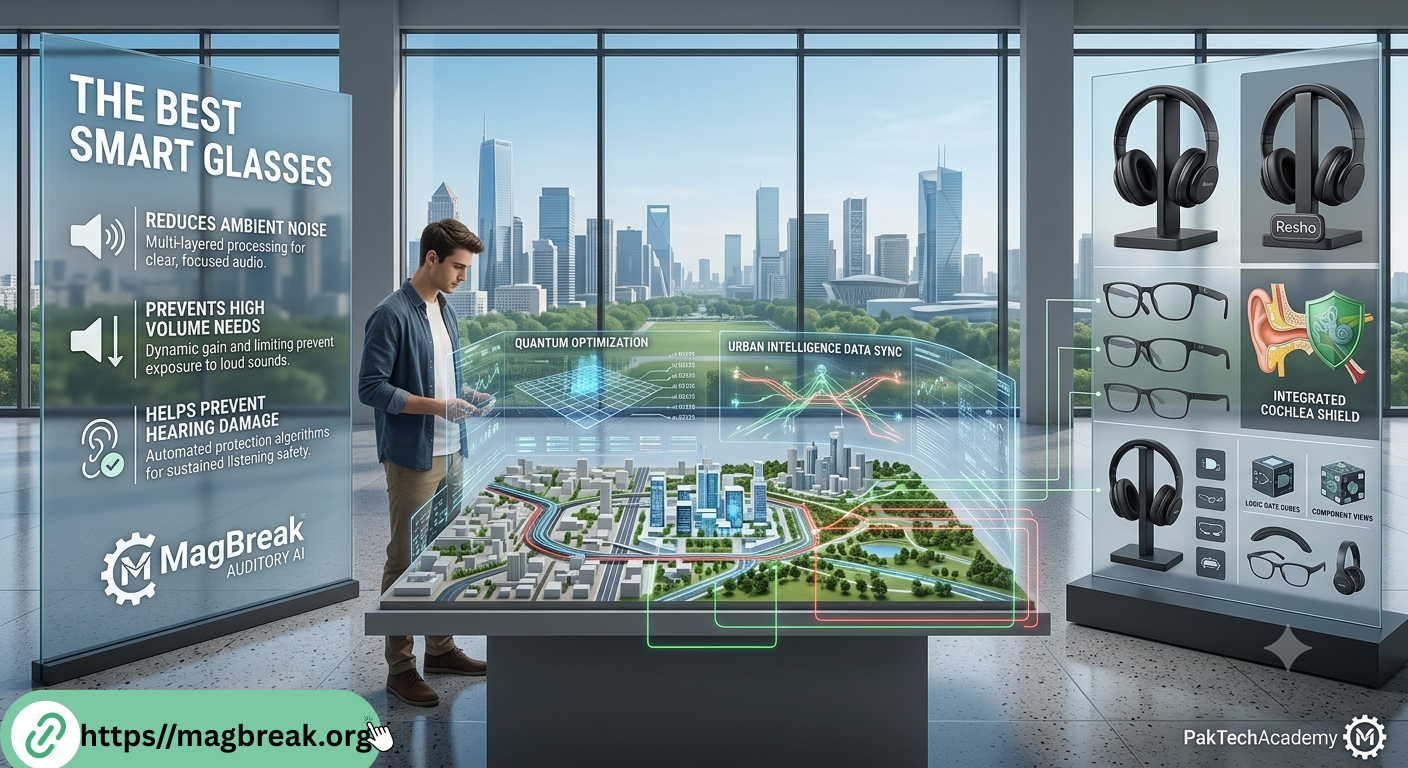
Quick Answer: The best smart glasses in 2026 combine lightweight designs with features like built in cameras, voice assistants, real time translation, and augmented reality displays. Leading options now focus on all day comfort and longer battery life rather than bulky headset style designs. Choosing the right pair depends on whether you prioritize style, AI features, or true AR capability.
What Are Smart Glasses?
best smart glasses are wearable eyewear that combine regular lenses with built in technology, such as cameras, speakers, microphones, or small displays.
Unlike full AR headsets, most smart glasses in 2026 are designed to look like normal eyewear while adding useful features in the background. This makes them far more practical for everyday, all day wear.
The tech team at Mag Break has been closely following this category, since smart glasses have quickly become one of the most talked about wearable devices this year.
Why Are Smart Glasses Becoming So Popular In 2026?
This category has grown rapidly, driven by real improvements in comfort, battery life, and everyday usefulness.
Lighter, More Comfortable Designs
Earlier smart glasses often felt bulky or awkward to wear for long periods. Newer models in 2026 focus heavily on weight reduction, making them barely distinguishable from regular glasses.
Stronger AI Integration
Built-in AI assistants now allow users to ask questions, get directions, or translate conversations in real time, simply through voice commands, without needing to pull out a phone.
What Features Should You Look For In Smart Glasses?
Not all smart glasses offer the same capabilities, so knowing what to prioritize helps narrow down the right choice.
Camera And Photo Capabilities
Many smart glasses now include built in cameras for hands free photos and videos, which has become one of the most popular features among everyday users.
Audio And Voice Assistant Support
Open ear speakers built into the frame allow users to listen to music or take calls without blocking outside sound, while voice assistants handle tasks like messaging or reminders.
Augmented Reality Display
Some higher end models include small AR displays that overlay information directly into your field of view, useful for navigation, notifications, or translation text.
How Do Smart Glasses Differ From AR Headsets?
Understanding this difference helps set realistic expectations before buying.
Smart glasses are designed for lightweight, everyday use and typically focus on audio, camera, and simple AI features rather than immersive visuals. AR headsets, on the other hand, are bulkier and built specifically for full augmented or mixed reality experiences, often used for gaming or professional applications rather than daily wear.
What Are The Best Use Cases For Smart Glasses In 2026?
best smart glasses fit naturally into several everyday situations where convenience matters most.
Frequent travelers benefit from real time translation features during conversations abroad. Content creators enjoy hands free photo and video capture during activities like walking tours or outdoor adventures. Professionals also use them for quick notifications and reminders without needing to check a phone constantly.
The team at Mag Break has noticed growing interest specifically from remote workers who want quieter, hands free ways to stay connected throughout the day.
How Do You Choose The Right Smart Glasses For You?
With several strong options available in 2026, choosing the right pair comes down to your specific priorities.
If style and everyday comfort matter most, look for lightweight models designed to resemble normal glasses closely. If AI features are your priority, focus on models with strong voice assistant integration and real time translation support. For anyone wanting a true augmented reality experience, a dedicated AR display model will offer far more capability than basic audio focused glasses.
Are Smart Glasses Worth Buying In 2026?
For many people, smart glasses now offer genuine everyday value rather than being just a novelty gadget.
Battery life has improved significantly compared to earlier models, often lasting a full day of moderate use. Prices have also become more accessible, with solid entry level options now available alongside premium AR focused models, making this a much easier purchase decision than in previous years.
Frequently Asked Questions
Here are quick answers to the most common questions about smart glasses in 2026.
What is the main difference between smart glasses and AR headsets?
Smart glasses focus on lightweight, everyday features like audio and cameras, while AR headsets are bulkier and built for immersive augmented reality experiences.
Do smart glasses have good battery life in 2026?
Yes, most modern smart glasses now offer enough battery life to last a full day of typical daily use.
Can smart glasses translate languages in real time?
Many current models include real time translation features powered by built in AI assistants, useful for travel and conversations.
Are smart glasses noticeable compared to regular glasses?
Newer 2026 models are designed to closely resemble regular eyewear, making them far less noticeable than earlier bulky designs.
Do smart glasses work well for taking photos and videos?
Yes, built in cameras are one of the most popular features, allowing hands free photo and video capture throughout the day.
Are smart glasses a good investment in 2026?
For most everyday users, yes, thanks to improved comfort, better battery life, and more accessible pricing across different feature levels.
Are smart glasses noticeable compared to regular glasses?
- Why People Are Searching Zerohedge .com in 2026
- US-China Talks: 5 Shocking Things Before the Trump-Xi Summit
- Emerging Africa Halal Fund: What It Is and How It Works
- Emergent Fund: A Complete Guide to Saving the Right Amount
- TikTok Shop Affiliate Contract: The Complete 7-Point Guide